Skip to content






Crashing Out Meaning: Why People Lose Control and How to Recognize the Signs
You’ve seen it. Maybe you’ve done it. Somebody hits one tiny inconvenience, a spilled coffee, a passive-aggressive email, and completely loses it, way past what the moment called for. There’s a name for that going around now. Crashing out.
So what does crashing out mean, really? Mostly it gets thrown around as a joke. But there’s something real under the memes, and it’s worth understanding, because crashing out isn’t random, and it definitely doesn’t mean you’re broken.
Usually, it’s a stressed, overloaded nervous system hitting the end of its rope. So let’s get into what’s happening when people lose control, and how to spot it coming in yourself.
What Does Crashing Out Mean in Modern Mental Health
If you’ve searched what does crashing out mean, the short answer is that it’s slang for losing your grip on your emotions, fast and hard. Think snapping, blowing up, bursting into tears, going off on someone, or shutting down entirely. The reaction lands way out of proportion to whatever set it off, and in the moment, it feels impossible to stop. Strip off the internet packaging and it’s really an emotional breakdown in miniature. The nervous system gets briefly overwhelmed and grabs the wheel. It might last thirty seconds or half a day. Either way, the person usually knows, even while it’s happening, that they’ve lost the plot.
The Difference Between Stress Response and Complete Breakdown
Not all stress is a problem. Your stress response is supposed to fire, it’s how you make a deadline or slam the brakes in traffic. It spikes, does its job, and settles. A complete breakdown, sometimes called a nervous breakdown, is what happens when that system stops switching off, or overshoots so hard that the thinking part of your brain drops out completely. The line between the two comes down to control and whether you can still steer.
Side by side, the difference is easier to see.
| Normal stress response | Crashing out |
| Ramps up, then settles once the pressure passes | Keeps climbing and boils over |
| You can still think and pick your reaction | The reaction fires before thought catches up |
| Uncomfortable, but manageable | Feels like the controls stopped working |
| Recovers with rest and a breather | Leaves you drained, foggy, sometimes ashamed |
How Your Body Signals Mental Exhaustion
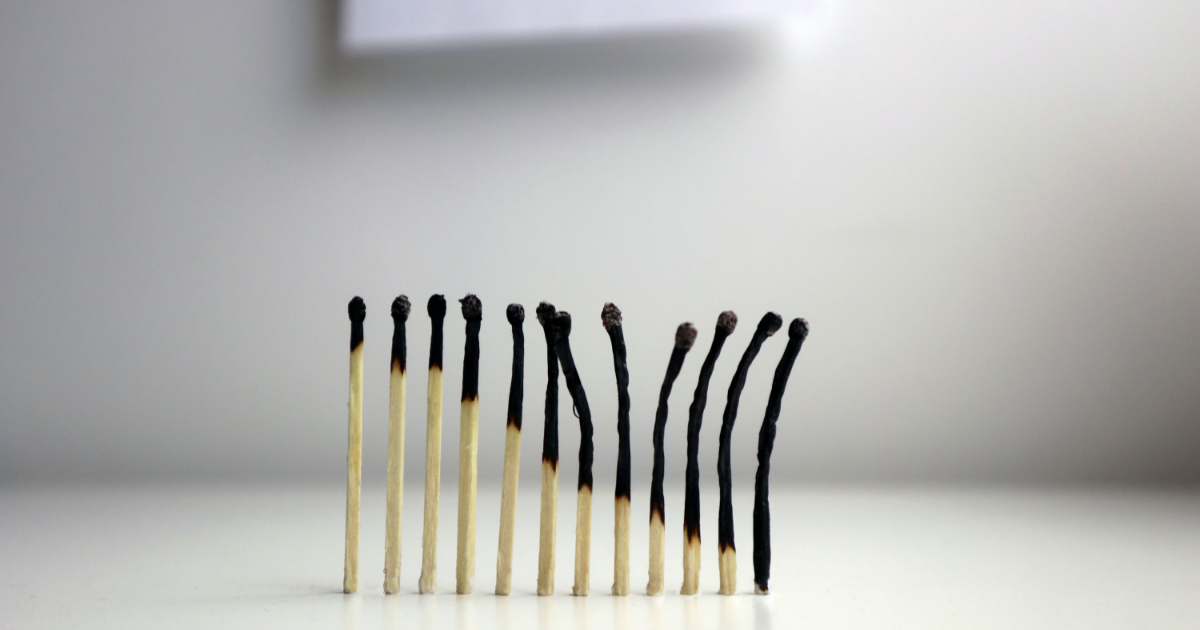
Your body tends to flag mental exhaustion well before you crash, if you know the signs. It speaks up physically first, because the mind is good at talking itself out of trouble. These are the ones worth watching for.
- Tiredness that a full night of sleep doesn’t touch.
- Headaches, a clenched jaw, or shoulders parked up by your ears.
- Your stomach acting up for no clear reason.
- A short fuse, where small annoyances suddenly feel enormous.
- That foggy, underwater feeling where focus just won’t come.
Recognizing the Warning Signs Before You Reach Your Breaking Point
The useful news is that crashing out has a runway. You don’t usually go from fine to exploding in one jump, there’s a buildup, and it leaves clues. Catching them early is the whole game, since it’s far easier to pull back at a simmer than at a boil. Watch for the shift.
- Everything starts feeling like too much, even small tasks.
- Dread in the morning, before the day has even done anything yet.
- You stop bouncing back from minor stuff that used to roll right off.
- Pulling away from people, canceling plans, going quiet.
Early Indicators of Impulse Control Issues
One of the clearest tells is what happens to your impulse control. When you’re depleted, the gap between feeling something and doing something shrinks, sometimes down to nothing. That pause where you’d normally think better of it just isn’t there anymore. You can usually feel it starting to slip.
- Little urges, to send the text, buy the thing, walk out, get much harder to resist.
- Reacting first and regretting it second turns into a pattern.
- Even you are surprised by how fast you went from zero to furious.
The Role of Burnout in Triggering Emotional Collapse
Burnout is the slow-motion version of all this, and it sets the stage for the fast version. The Mental Health Foundation describes burnout as the physical, mental, and emotional exhaustion that piles up under long-term stress, and warns that it rarely gets better on its own. When you’re that empty, there’s nothing left to regulate with. Your emotional reserves are what normally absorb a rough moment, and burnout drains them dry. So a trigger that would’ve been a shrug on a good week becomes the thing that makes you crash out on a burnt-out one. That’s why collapse so often traces back to burnout that got ignored for too long.
Anger Outbursts and Nervous System Dysregulation
Anger outbursts are the loudest way crashing out shows up, and there’s real biology behind them. The Open University explains that a threat can reach the amygdala through a fast, crude shortcut and set off the fight-or-flight response a split second before you’re even aware of it. That’s the part people miss. The reaction fires before the thinking brain gets a vote. When your nervous system is already dysregulated, running hot from stress or burnout, the trigger gets lighter and the explosion gets bigger. You’re not choosing to blow up. Your alarm system just beat your reasoning to the punch.
Why Overwhelming Situations Lead to Sudden Reactions
It’s rarely the big thing that does it. It’s the big thing landing on top of forty small things, until one more, a jammed printer, a rude tone, tips the whole pile over. That’s why the reaction looks so out of proportion from the outside. Nobody else can see the forty things underneath. When you’re maxed out, there’s no buffer between what happens and how you respond, so the response comes instantly and at full volume. The situation didn’t get bigger. Your capacity to absorb it has decreased.
Recovery Strategies and Regaining Emotional Stability
Once you understand what does crashing out mean in your own life, the next question is how to make it happen less. The way back is more practical than dramatic. Part of it is what you do in the heat of the moment. Most of it is what you do the rest of the time, so the hot moments get rarer. Recovery is real, for burnout and for a nervous system stuck in overdrive. Both can be retrained, with a little patience.
- In the moment, buy yourself a pause, step away, breathe slow, plant your feet on the floor.
- Guard your sleep like it’s the foundation for everything else, because it mostly is.
- Take something off your plate. Less input means less to overload on.
- Move your body regularly, since it burns off the stress charge before it can stack up.
- If the crashes keep coming, talk to someone. This is exactly the kind of thing therapy is built for.
Getting Professional Support at Kentucky Wellness Center
If you keep crashing out, or the buildup never really eases, that’s a sign to bring in help, not a sign you failed at handling life. A good therapist can help you spot your triggers, settle a dysregulated system, and rebuild that pause between feeling and reacting.
That’s the work we do at Kentucky Wellness Center. If any of this sounds like your life lately, reaching out is a solid next step.
You don’t have to keep riding this out and hoping the next blowup stays away. Reach out to Kentucky Wellness Center, and we’ll help you get back to steady.

FAQs
-
Can nervous system dysregulation cause sudden anger outbursts without warning?
It can, and it’s a big reason those outbursts feel like they come from nowhere. When your system is dysregulated, the threat response can fire before the thinking part of your brain catches up, so the anger is out before you even clock it. The early warning signs are usually there earlier in the day, just quieter than the explosion.
-
How long does emotional recovery typically take after a complete breakdown?
It really depends on what led up to it and what support you have, so the timeline varies a lot. Some people feel steadier within days once they rest and lower the pressure. Deeper recovery, especially after a long stretch of burnout, can take weeks or months, and trying to rush it tends to backfire.
-
What physical symptoms appear when mental exhaustion reaches a critical point?
Common ones include deep fatigue that sleep doesn’t fix, headaches, muscle tension, stomach trouble, and catching every bug going around. Sleep and appetite often go sideways too. When your body starts sounding these alarms, it’s asking for a real break, not another push.
-
Is impulse control loss during burnout reversible with proper intervention?
Yes, in most cases. Impulse control tends to return as your reserves refill through rest, lighter demands, and support, since a lot of the problem is depletion rather than damage. Therapy can speed things up by teaching skills that widen the gap between feeling and reacting.
-
How do you know if stress response has crossed into nervous breakdown territory?
The tell is usually function. Everyday stress is uncomfortable, but you can still work, connect, and cope, while a so-called nervous breakdown is when it all becomes too much to manage and daily life stalls out. If you can’t function the way you normally would, and it isn’t lifting, that’s the point to reach out for help.