Skip to content







Overcoming Apathy: Why Indifference Destroys Your Success and How to Reignite Your Drive
Key Takeaways
- Apathy is a persistent loss of motivation, interest, and emotion — not just laziness or ordinary tiredness.
- It is frequently a symptom of depression, but it can also stand alone or stem from neurological conditions, stress, or brain-chemistry changes.
- Apathy differs from depression in one key way: it can occur without sadness — a flat, “the spark is missing” feeling.
- Left unaddressed, prolonged indifference quietly erodes your goals, relationships, and wellbeing.
- The encouraging news: apathy is usually treatable, and small, consistent action can help reignite your drive.
You know something is off when things that used to excite you now leave you cold. You have the time, maybe even the ability — but not the will. This flat, “why bother?” feeling has a name: apathy. And while it is easy to dismiss as laziness or a passing bad mood, chronic apathy can quietly undermine your success, your relationships, and your sense of purpose.
The good news is that apathy is a signal, not a life sentence. In this guide, we will look at what apathy really is, how it differs from ordinary tiredness, its hidden link to depression, what is happening in your brain, and — most importantly — how to reignite your drive. If your get-up-and-go has got up and gone, keep reading.
What Is Apathy and Why It Matters More Than You Think
So what is apathy, exactly? A useful apathy definition, drawn from clinical research, is a persistent reduction in motivation, goal-directed behavior, and emotional responsiveness that is not explained by tiredness or low intelligence. In plain terms, it is a loss of the drive and interest that normally push us to act, connect, and care. It tends to show up across three areas: behavior (doing less), thinking (planning and initiating less), and emotion (feeling less).
This matters more than people realize, because apathy is easy to normalize. We call it being “checked out,” “in a rut,” or “just not feeling it.” But when indifference lingers for weeks and touches multiple areas of life, it is worth paying attention — it can be your mind’s way of flagging that something deeper needs care.
The Difference Between Apathy and Normal Tiredness
Everyone feels unmotivated sometimes, so how do you tell apathy from ordinary tiredness? The key is persistence and reach. Normal tiredness lifts with rest, a good night’s sleep, or a break — and your interest returns. Apathy does not. It sticks around even when you are rested, and it flattens your enthusiasm across the board: work, hobbies, relationships, things you used to love. Tiredness says “I need a break”; apathy says “I do not care either way.”
How Emotional Detachment Sabotages Your Goals and Relationships
Apathy rarely stays contained. Its close cousin, emotional detachment — feeling numb or disconnected — can quietly erode the two engines of a fulfilling life: your goals and your relationships. When you cannot summon motivation, projects stall, ambitions fade, and small tasks pile into overwhelming mountains. When you cannot access emotion, connection suffers: you may withdraw, respond flatly, or stop reaching out, leaving loved ones feeling shut out. Over time, this indifference can cost you opportunities and intimacy you actually want — which is exactly why it deserves attention rather than dismissal.
The Hidden Connection Between Apathy and Depression Symptoms
Apathy and depression are closely linked but not identical. Apathy is one of the most common depression symptoms — a loss of interest and motivation that can hollow out daily life. Yet apathy can also occur without the sadness, guilt, or hopelessness that define depression; you might feel emotionally flat rather than actively low. Because of this overlap, apathy is sometimes the first visible sign that depression is developing — or the symptom that lingers even after mood improves.
Recognizing When Indifference Becomes a Mental Health Concern
Occasional indifference is human. It becomes a mental health concern when it is persistent (lasting weeks), pervasive (affecting work, relationships, and self-care), and impairing (getting in the way of the life you want). Warning signs include no longer caring about things that used to matter, neglecting responsibilities or hygiene, withdrawing from people, and a flat “nothing feels worth it” outlook. If that sounds familiar, it is a reason to reach out for support — not to push harder alone.
Why Motivation Loss Often Goes Undiagnosed
Motivation loss is easy to miss because it does not look “dramatic.” Unlike anxiety or visible sadness, apathy is quiet — it fades into the background as procrastination, disengagement, or “just being lazy.” People often blame themselves for weak willpower rather than recognizing a treatable symptom. And because apathetic people, by definition, may not feel motivated to seek help, it can go unaddressed for a long time. Naming it accurately is the first step toward change.
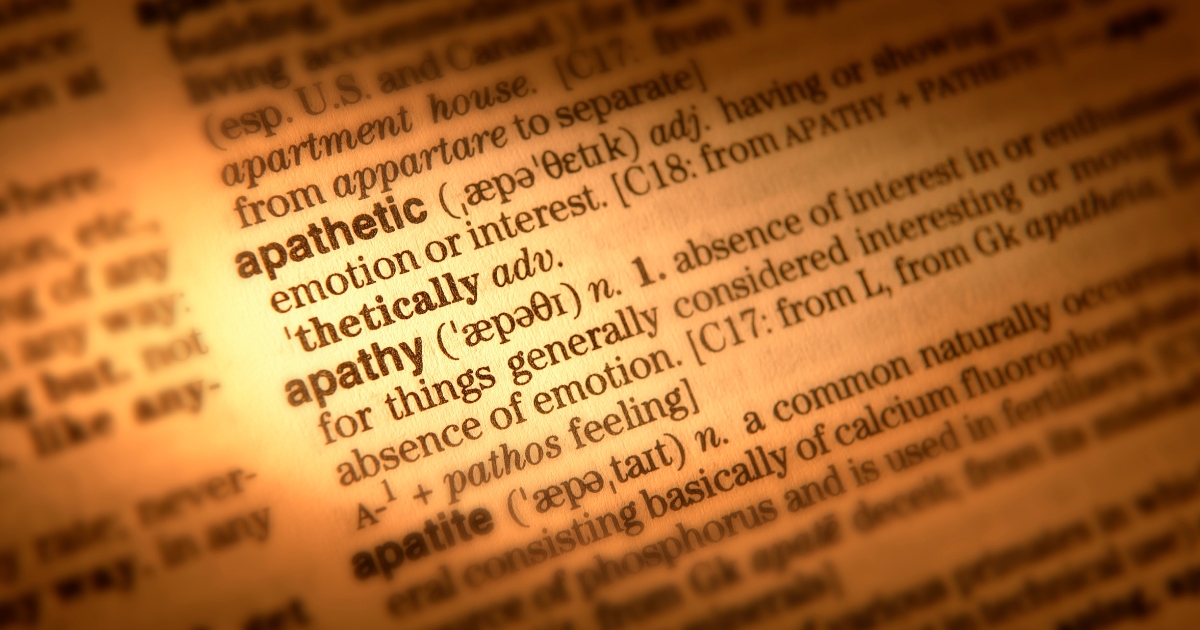
Lethargy and Lack of Motivation: Breaking the Cycle
Lethargy — that heavy, sluggish, low-energy state — and lack of motivation feed each other in a vicious cycle. Feeling low on energy, you do less; doing less brings fewer rewarding experiences and less momentum; and that emptiness deepens the lethargy. Breaking the cycle usually starts not with waiting to feel motivated, but with taking one small action anyway. Action often comes before motivation, not after it — a tiny step can create a spark that willpower alone could not.
The Physical and Psychological Toll of Prolonged Indifference
Prolonged indifference takes a real toll. Physically, it can pair with fatigue, disrupted sleep, and neglected health habits. Psychologically, it chips away at self-esteem (“what is wrong with me?”), strains relationships, and can slide into or deepen depression. The longer apathy goes unaddressed, the more life tends to narrow — but that narrowing is reversible, not permanent.
How Your Brain Chemistry Contributes to Apathy
Apathy is not a character flaw — it has real roots in brain chemistry. Research links apathy to reduced activity in the brain’s motivation and reward circuits, especially the anterior cingulate cortex and ventral striatum, with dopamine playing a central role. Dopamine helps translate “I want this” into “I will put in the effort to get it.” When these circuits under-function — because of depression, chronic stress, certain medications, or neurological conditions — the drive to act simply does not fire the way it should.
Practical Strategies to Reignite Your Drive and Purpose
Reigniting your drive is possible, and it usually starts small. Try these evidence-informed strategies:
- Act first, feel later. Take one tiny step (make the bed, a five-minute walk) without waiting for motivation to arrive.
- Break tasks down. Shrink goals until the next step feels almost too easy to skip.
- Reconnect with values. Ask what actually matters to you — meaning fuels motivation more than pressure does.
- Build gentle routine. Structure reduces the number of decisions that apathy makes exhausting.
- Move your body and reconnect. Exercise and social contact both support the brain chemistry behind motivation.
Progress may feel slow at first, and that is okay. Each small action is a vote for the more engaged life you are rebuilding.
Taking Action: Mental Health Support at Kentucky Wellness Center
Sometimes apathy is too heavy, or too tangled up with depression, to shift on your own — and that is not a failure. Professional support can identify what is driving your indifference and treat it directly, whether that is depression, burnout, or something else.
At Kentucky Wellness Center, our compassionate team uses evidence-based care like CBT and behavioral activation to help you understand your apathy, treat any underlying conditions, and gradually reconnect with drive and purpose. If indifference has taken the color out of your life, contact Kentucky Wellness Center to take the first step back toward feeling engaged again.

FAQs
Can apathy mask underlying depression symptoms you might be ignoring?
Yes. Apathy is one of the most common depression symptoms, and because it shows up as flat indifference rather than obvious sadness, it is easy to overlook or write off as laziness. Someone can be depressed and mainly notice that they simply do not care about anything anymore. If persistent apathy is your main experience, it is worth exploring whether depression is underneath it, ideally with a professional.
How does emotional detachment differ from clinical depression or other mental health conditions?
Emotional detachment — feeling numb or disconnected — is a symptom that can appear in many conditions, including depression, anxiety, PTSD, and as a stress response, whereas clinical depression is a specific diagnosis involving persistent low mood, loss of interest, and other symptoms together. Detachment can also be a temporary protective reaction to overwhelm. Because it overlaps with several conditions, a professional evaluation is the best way to understand what is driving it.
What brain chemistry changes trigger lethargy and persistent lack of motivation?
Persistent lack of motivation and lethargy are linked to under-functioning in the brain’s reward and motivation circuits, especially those involving dopamine and regions like the anterior cingulate cortex and ventral striatum. Dopamine helps convert desire into effort, so when its signaling is disrupted — by depression, chronic stress, certain medications, or neurological conditions — drive drops. This is a physiological process, not a lack of character.
Is motivation loss reversible or does prolonged indifference cause permanent damage?
In the vast majority of cases, motivation loss is reversible. Apathy is typically a symptom of something treatable — like depression, burnout, or a medication effect — rather than permanent damage. With the right support, behavioral strategies, and treatment of any underlying cause, most people can rebuild their drive. The key is not waiting indefinitely for motivation to return on its own.
When should emotional numbness prompt you to seek professional mental health support?
Reach out when emotional numbness lasts more than a couple of weeks, spreads across areas of your life, interferes with work or relationships, or comes with other signs of depression. Seek help sooner if you have thoughts of self-harm or that life is not worth living — in that case, call or text 988 right away. Reaching out early tends to make recovery faster and easier, and you do not have to wait until things feel unbearable.
This article is for educational purposes only and is not a substitute for professional medical or mental health care. If you are in crisis or having thoughts of harming yourself, call or text 988 (the Suicide & Crisis Lifeline) or dial 911 right away. Support is available.
References
1. Journal of Neuropsychiatry (American Psychiatric Association Publishing). Apathy: Why Care? https://psychiatryonline.org/doi/10.1176/jnp.17.1.7
2. National Institutes of Health (PMC). A Closer Look at Apathy: Concept, Neurobiology, and Treatment. https://www.ncbi.nlm.nih.gov/pmc/articles/PMC9475982/
3. L’Encephale / ScienceDirect. Apathy and Depression: Which Clinical Specificities? https://www.sciencedirect.com/science/article/abs/pii/S2468171717300327
4. National Institutes of Health (PMC). Dysthymia and Apathy: Diagnosis and Treatment. https://www.ncbi.nlm.nih.gov/pmc/articles/PMC3130974/