Skip to content






There’s a moment everyone has.
Maybe it was the phone call about a grandparent. Maybe it was the morning you found out about something on the news that made the rest of the day feel like it was happening underwater. Years later, you can still picture the room. The weather. Whoever was standing closest to you. Even the shirt you were wearing, which is wild because you can’t remember what you wore yesterday.
That kind of vivid recollection has a name. Researchers call it flashbulb memory — a particular type of autobiographical memory that gets seared into you when something emotionally significant happens.
This blog walks through what’s actually going on underneath it — how emotional memory encoding works, why these moments survive when ordinary days dissolve, and what to do when one of them refuses to settle.
What Is Flashbulb Memory and Why Does It Happen
Ask anyone who was old enough on September 11, 2001, and they’ll tell you where they were. The light in the room. The look on someone’s face. What they had been about to say. Decades later, the moment still has resolution.
That’s flashbulb memory. The term was coined in 1977 by psychologists Roger Brown and James Kulik to describe the unusually vivid, almost photographic recollections people form around emotionally significant events. It’s a specific kind of episodic memory formation — where the brain doesn’t just store the event, but the full surrounding context. The metaphor was that the brain, in those moments, flashes a kind of internal photograph, capturing not just the event but the room it happened in.
Science has refined that picture since then, but the core observation has held. The National Library of Medicine’s MedlinePlus notes that emotionally charged memories activate memory systems with greater intensity, which is part of why these moments tend to feel preserved while ordinary days dissolve.
Common Triggers That Form These Memories
Most flashbulb memories share a few features. The event is usually:
- Unexpected — you didn’t see it coming
- Emotionally significant — to you or to your wider community
- Consequential — something about your life or worldview will be different after it
- Discussed afterward — you talked about it, heard others talk about it, rehearsed the moment
- Tied to a specific location — you can still picture where you were
The Role of Trauma in Flashbulb Memory Formation
Not all flashbulb memories are negative — graduations, weddings, the day a child is born can all qualify. But the most persistent ones tend to be the painful ones. Evolutionarily, the brain prioritized remembering threats. A close call, a sudden loss, a violent encounter — these were the memories that helped your ancestors survive. The neural machinery hasn’t fully caught up to the fact that most modern life isn’t survival-threatening, which is part of why we still encode bad news so much more vividly than good news.
When Negative Events Create Persistent Images
People who’ve been through traumatic events often describe their memories of those moments as “stuck” — not faded, not reframed, just present. Some can recall the exact word someone said. The fluorescent lighting in a hospital corridor. The way a phone vibrated on a wooden table. This kind of stuck memory isn’t a malfunction. It’s the system working exactly as designed, which is part of why it can be so difficult to live with.
Why Some Flashbulb Memory Details Feel So Real
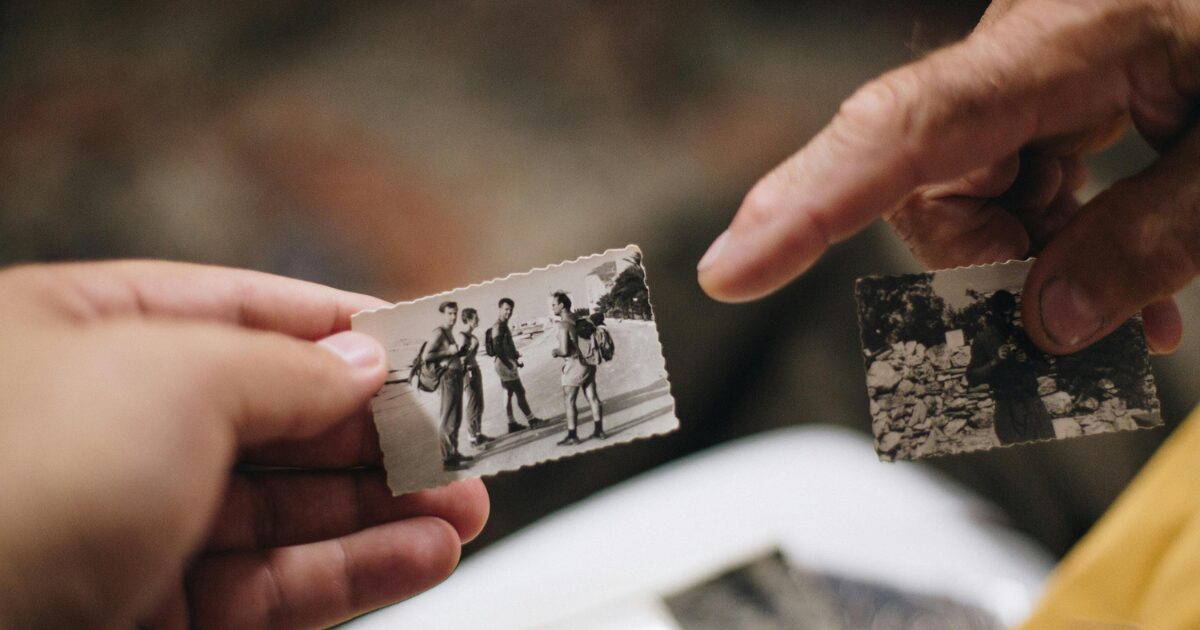
Here’s where flashbulb memory gets genuinely interesting. The details feel real. Like, undeniably real. You’d swear on them. And research has shown, repeatedly, that some of those details are wrong.
The Confidence-Accuracy Paradox
Studies of memory accuracy over time — including some famous studies tracking flashbulb memories after major public events — have found that confidence stays high, while the details quietly degrade. With most memories, confidence and accuracy decline together. Flashbulb memories break that pattern. None of this means your memory is fabricated — the brain treats emotionally significant moments differently, preserving the felt sense while gradually editing the details around it.
Social Rehearsal and Memory Reinforcement
One reason flashbulb memories stay so sharp: we tell them. Repeatedly. To friends, family, coworkers, sometimes strangers. Every time you tell the story, the memory gets reinforced — and slightly rewritten. The version you remember now is partly the original event and partly the story you’ve been telling about it for years.
The Difference Between Normal Memories and Flashbulb Recall
Here’s how ordinary memories and flashbulb memories actually differ in feel, detail, and reliability:
| Feature | Ordinary memory | Flashbulb memory |
| How it feels | Vague, fades, hard to date | Sharp, sensory, frozen in time |
| Detail level | Bullet points, no setting | Lighting, smell, what someone wore |
| Emotional weight | Mild or none | Strong, often the same on recall |
| Accuracy | Decays the way you’d expect | Decays too, but the confidence doesn’t |
When Vivid Flashbulb Memory Becomes Overwhelming
Most people carry a few flashbulb memories without much trouble. They surface occasionally, take a minute to feel, and then settle back down. But some — especially those tied to trauma — don’t settle. They keep arriving uninvited, with the same emotional weight they had the day they formed. When that happens, it’s no longer just memory. It’s starting to act on the nervous system in ways that need clinical attention.
Recognizing Signs of Intrusive Recollections
A few signs the memory has moved into intrusive territory:
- It returns at unexpected moments, multiple times a week
- It triggers strong physical reactions — racing heart, sweating, nausea
- It interrupts sleep through dreams or nighttime wakings
- You’ve started avoiding people, places, or topics that bring it back
- You’re losing time, dissociating, or feeling outside your body when it surfaces
None of these alone are a diagnosis. A cluster of them — especially over more than a month — is usually a signal to talk to someone trained.
The Impact on Daily Functioning and Relationships
Intrusive memories don’t just disrupt sleep. They quietly reorganize a person’s life. People start declining invitations. Avoiding certain streets. Holding back from new relationships because the old wound is too close to the surface. Family and friends often notice before the person experiencing it does, since the changes happen gradually.
Start Your Recovery Journey at Kentucky Wellness Center
Understanding flashbulb memory is one thing. Living with one that won’t let you go is another. Trauma-informed therapy can help you process the memory, reduce its emotional charge, and slowly reclaim the parts of your life it’s been quietly shaping.
Kentucky Wellness Center offers clinical support for trauma, anxiety, intrusive memory, and the conditions that often travel alongside them. Reach out to Kentucky Wellness Center today to start working with a clinician who can help you move forward without erasing what mattered.

FAQs
-
How does flashbulb memory differ from ordinary recollection?
Flashbulb memories are richer in sensory detail, longer-lasting, and more confidently held than ordinary memories — typically tied to emotionally significant events and preserving the surrounding context like what you were doing, who you were with, and what the room looked like. The twist is they aren’t necessarily more accurate; they just feel more accurate, with confidence staying high for decades even as specific details quietly drift.
-
Can flashbulb memory accuracy decline over time despite feeling vivid?
Yes — it’s one of the most consistently replicated findings in memory research, with studies tracking flashbulb memories over five, ten, and even thirty years showing measurable changes in recollection even as confidence stays strong. None of these errors come from dishonesty; the brain rebuilds memories every time you recall them, and small edits accumulate.
-
Why do traumatic events create stronger flashbulb memory than positive ones?
The brain evolved to prioritize threat-related information because forgetting a danger could kill you, so fear-based and grief-based experiences trigger more stress hormones, stronger amygdala activation, and deeper memory consolidation than equally significant positive events. People do form flashbulb memories of weddings and graduations, but trauma-linked memories tend to be more durable — the system isn’t broken, it’s working exactly as designed on material you’d rather forget.
-
Which brain regions are most active during flashbulb memory formation?
Three structures do most of the heavy lifting: the amygdala assigns emotional weight, the hippocampus encodes the experience into long-term memory with unusual richness when the amygdala is highly active, and the prefrontal cortex contextualizes the event. Functional MRI studies show elevated coordination between these regions during emotionally charged encoding, which is part of why flashbulb memories develop their distinctive vividness and stability.
-
How can therapy help when flashbulb memory becomes intrusive?
Trauma-focused therapy doesn’t try to erase the memory — that isn’t possible, and most clinicians wouldn’t want to, since the memory often carries information the person needs — instead, it works to reduce the emotional charge so the memory can be recalled without flooding the body with stress hormones. EMDR, trauma-focused CBT, prolonged exposure, and somatic experiencing all do versions of this work, and most patients with intrusive memory see significant relief within twelve to twenty sessions.